What's Holding Back The Espresso Coffee Grinder Industry?
Choosing an Espresso Coffee Grinder Espresso requires a consistent, fine grind. Many people are focused on the espresso machine or the quality of the beans, but the quality of the grinder is just as important. You can make micro-adjustments with precision using a stepless adjustment knob. This is preferable to a stepped adjustment which may contain numbers or hashes that mark your desired grinding degree. Burrs of different types When it comes to choosing an espresso maker, the type of burrs that are used is an important factor. Grinders that are designed specifically to make espresso use larger motors and a unique burr design to create the finest grind, which is essential for producing the highest quality espresso. Traditional grinders for drip, pour over, or French press are not suitable for espresso brewing because they do not grind coffee beans fine enough. The two most common kinds of burrs used in grinders are flat burrs and conical burrs. Both have advantages and disadvantages, but it really depends on your brewing style and preferences. Flat burrs offer better consistency in the grind that can lead to more clear and cleaner cups of coffee. However, they do generate more heat during grinding and leave stragglers in the grind which can affect the flavor of your espresso. 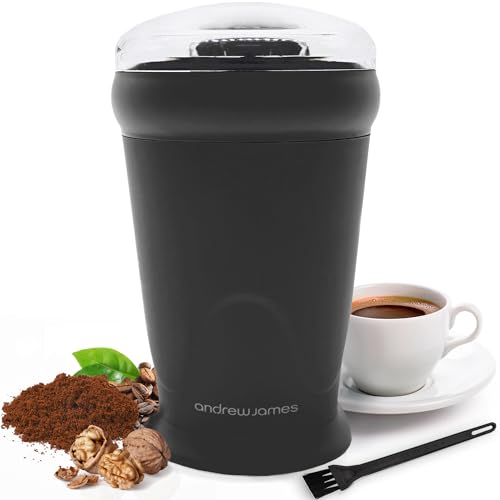 smart grinder pro on the other hand can accommodate a wider range of grind sizes. From coarse for French presses, to very fine for espresso. Additionally, they are generally easier to clean compared to flat burrs. There is some debate as to whether flat or conical burrs are more appropriate for espresso, but this largely comes down to your personal preference and the type of coffee you're making. There is evidence that suggests flat burrs have more distinct flavors and conical burrs yield fuller body. However, this is not always the situation. The RPM (revolutions-per-minute) and the size of a grinder can also affect the flavor taste. The type of burrs can influence the overall quality of the grind, but other factors are also important to take into consideration. For instance the motor's RPM could generate heat that could alter the taste of your coffee. The noise level of the grinder and its grind retention can also have an impact on the quality of espresso. These variables are usually more dependent on the motor of the grinder than its type of burrs. The Burrs' Size The size of the burrs is a key element in determining the grade of espresso. The more fine the grind, the larger burrs. Smaller burrs result in more coarse, and less suitable grind for espresso. The size of the burrs could also affect how quickly the grinder grinds coffee. Larger burrs require a larger motor and they can be noisy. However, they are able to grind faster and produce much less heat. The less heat produced can lead to less variability in the grind size, and an easier extraction. The shape of the burrs will also influence how beans are grind. Flat burrs provide an even grind, for example. They are also believed to be quieter than conical burrs however this is contingent on the motor of the grinder and other factors. It is crucial to select a flat-burr grinder with a good design and quality materials. They reduce friction, which can cause the ground to clump and generate static electricity inside the grinder. They also reduce the amount of heat generated during grinding, which could affect the quality of the espresso. When selecting a flat burr grinder, choose one made of a sturdy material like titanium or stainless steel. These materials are resistant to the accumulation of heat during grinding and are extremely durable. They are also less difficult to clean and endure the constant pressure that is typically placed on a burr grinder during use. The type of grinder you choose will have a significant impact on the quality of your espresso. The burrs must be properly aligned to ensure that they don't cross-cut or collide. This could lead to inconsistent ground size and cause damage to the grinder. If you notice that the burrs aren't properly aligned, it may be necessary to consult an expert to get help. As time passes, if your grinder is used frequently the burrs could be out of alignment. This could result in the formation of a ridge that can affect the consistency of your coffee grounds and the quality of your espresso. If this happens, it is a good idea to replace the burrs using a set that is specifically designed for your grinder. SSP's 64mm Unimodal Red Speed Burr sets can, for instance, be used to replace the original burrs in numerous popular espresso-focused grinders such as the Mazzer Superjolly and Option -O Lagom P64. Weight of the Burrs While it's beneficial to think about the size and shape of the burrs, the weight of the burrs is important. The heavier the burrs, the greater the force imposed by the grinder on the coffee beans. This will affect the speed at which they grind and, in turn the size of particles produced. The size and weight of the burrs determine how finely a grind can be produced. In general, a more fine grind will produce a larger particle size distribution while a coarser grind will produce smaller size distribution. This is why it's crucial to understand the role of the burrs in choosing the right espresso grinder. A burr grinder that is of high-quality will result in more uniform particle sizes, which are essential to ensure consistent extractions. The more sharp the burrs, the less likely they will wear out over time. A dull burr will not cut the coffee beans exactly and will cause them to squish. This can result in an increase in clogging, a buildup of heat and slower grinding speeds. A little wear and tear on the burrs is normal, however grinders with poor quality burrs could quickly become unreliable. This is true especially for a commercial coffee grinder which is used frequently. This is why it's essential to select a high-quality burr grinder and to keep it well-maintained. A great way to evaluate the performance of a grinder is to run a small amount of fresh, roast coffee beans through it. Look at the results in your hands. If the burrs are dispersed, it's time to replace them. This will not only enhance your brews but also extend the life of your grinder and ensure that it is able to continue to work efficiently. Burrs can be adjusted. Burrs If you are selecting an espresso grinder it is essential to choose one that can provide an even distribution of grind size. This will enable you to create consistently balanced espresso shots every time. To accomplish this, select a grinder that has an adjustable upper burr. This allows you to modify the grind you are using. The ability to adjust the burrs will also ensure consistency, as you can easily alter the amount of fine or coarse coffee is ground. The upper burr can be adjusted by turning the lock ring which holds the upper sanding burr. This ring can be turned clockwise to produce an even finer grind, and counterclockwise for an even coarser grind. This is particularly useful for altering the size of your grinder to make espresso. It is important to be aware of how fine the grind is before making coffee as it can alter the flavor of espresso. Some prefer a finer grind for their espresso because it adds more flavor to the shot and also reduces the flow of water which is required to make a shot of espresso. A finer grind can be more difficult to use since it can clog the portafilter's container. It is advised to make use of a medium or coarse grind for your espresso grinder. The lock ring lets you to switch quickly between the two grind sizes. When you are looking for an espresso grinder you should also look at the amount of noise it produces. You should select a grinder which is quiet but not too quiet, as this can negatively affect the quality of your coffee. The best way to test the level of noise is placing your ear on the grinder and listen for a humming sound. If you hear a humming sound, you need to think about switching to another grinder as it is too loud to use.